
What the House Remembers
Before I ever placed a piece of furniture for a client, I was on my knees in an excavation site, brushing dust off a broken piece of pottery, trying to imagine the hand that shaped it.
I studied archaeology before I studied design. I don't think I ever really left it behind. I just learned to read a different kind of site.
Every home I walk into for the first time gives itself away, if you know where to look. A doorframe with pencil marks tracking a child's height, year after year. A kitchen chair angled slightly toward the window, because someone always sits there with their coffee. A stair tread worn pale in the center, from thousands of ordinary mornings. None of it was designed. It simply happened, the way a life happens, and it is the most honest brief a client will ever give me.
This is the part of the process no one sees. Before I sketch a single layout, I walk through a home the way I once walked through a site: slowly, without assuming, letting the space tell me what mattered here. What was protected. What was touched every day until it softened. What was quietly let go.
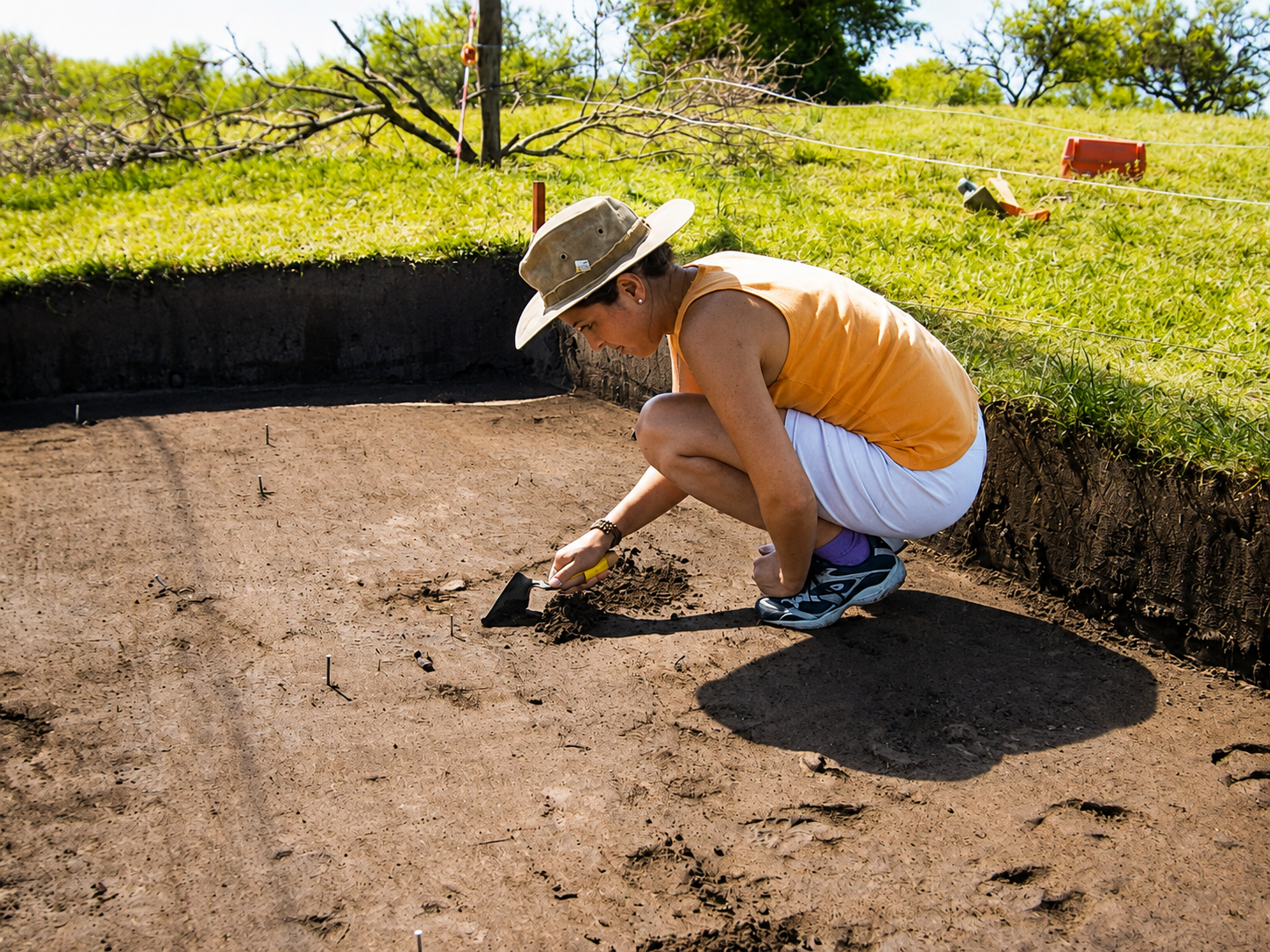
I have never believed a home should be designed for how it looks in a photograph. An archaeologist doesn't judge a civilization by a single fragment, and I don't think a designer should judge a family by a single moment either. A house is not a reveal day. It is layers, built slowly, the way sediment is built slowly — and our work is to design in a way that respects the layers still to come.
That is where I think quiet luxury and archaeology actually meet. Both are patient. Both trust that meaning is something that accumulates rather than something you can stage. A brass handle that will wear smooth in exactly the place a hand returns to. A stone floor that will carry its own quiet history underfoot. We are not choosing these materials for how new they look today. We are choosing them for who they will still be in twenty years.
I don't reconstruct lives anymore, the way I once tried to from fragments in the ground. Now I do something closer to the reverse: I help build the setting where a life hasn't happened yet, but will.
Still, the instinct is the same one I learned kneeling in the dirt. Observe before you interpret. Interpret before you touch anything. And never assume you understand a place until it has shown you what it's already kept.